The Mind of the Abuser
By: Dr. Sam Vaknin
Click HERE and HERE to Watch the Videos
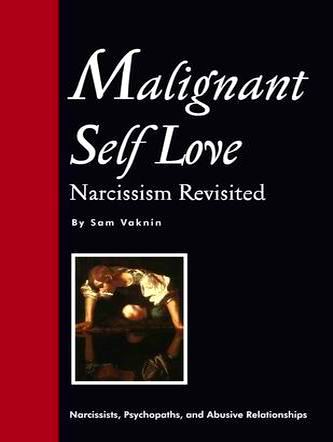
Malignant Self Love - Buy the Book - Click HERE!!!
Relationships with Abusive Narcissists - Buy the e-Books - Click HERE!!!
READ THIS: Scroll down to
review a complete list of the articles - Click on the blue-coloured
text!
Bookmark this Page - and SHARE IT with Others!
Important Comment
Most abusers are men. Still, some are women. We use the masculine and feminine adjectives and pronouns ('he", his", "him", "she", her") to designate both sexes: male and female as the case may be.
To embark on our exploration of the abusive
mind, we first need to agree on a taxonomy of abusive behaviours. Methodically
observing abuse is the surest way of getting to know the perpetrators.
Abusers appear to be suffering from dissociation (multiple personality). At home, they are intimidating and suffocating monsters – outdoors, they are wonderful, caring, giving, and much-admired pillars of the community. Why this duplicity?
It is only partly premeditated and intended to disguise the abuser's acts. More importantly, it reflects his inner world, where the victims are nothing but two-dimensional representations, objects, devoid of emotions and needs, or mere extensions of his self. Thus, to the abuser's mind, his quarries do not merit humane treatment, nor do they evoke empathy.
Typically, the abuser succeeds to convert the abused into his worldview. The victim – and his victimizers – don't realize that something is wrong with the relationship. This denial is common and all-pervasive. It permeates other spheres of the abuser's life as well. Such people are often narcissists – steeped in grandiose fantasies, divorced from reality, besotted with their False Self, consumed by feelings of omnipotence, omniscience, entitlement, and paranoia.
Contrary to stereotypes, both the abuser and his prey usually suffer from disturbances in the regulation of their sense of self-worth. Low self-esteem and lack of self-confidence render the abuser – and his confabulated self – vulnerable to criticism, disagreement, exposure, and adversity – real or imagined.
Abuse is bred by fear – fear of being mocked or betrayed, emotional insecurity, anxiety, panic, and apprehension. It is a last ditch effort to exert control – for instance, over one's spouse – by "annexing" her, "possessing" her, and "punishing" her for being a separate entity, with her own boundaries, needs, feelings, preferences, and dreams.
In her seminal tome, "The Verbally Abusive Relationship", Patricia Evans lists the various forms of manipulation which together constitute verbal and emotional (psychological) abuse:
Withholding (the silent treatment), countering (refuting or invalidating the spouse's statements or actions), discounting (putting down her emotions, possessions, experiences, hopes, and fears), sadistic and brutal humor, blocking (avoiding a meaningful exchange, diverting the conversation, changing the subject), blaming and accusing, judging and criticizing, undermining and sabotaging, threatening, name calling, forgetting and denying, ordering around, denial, and abusive anger.
To these we can add:
Wounding "honesty", ignoring, smothering, dotting, unrealistic expectations, invasion of privacy, tactlessness, sexual abuse, physical maltreatment, humiliating, shaming, insinuating, lying, exploiting, devaluing and discarding, being unpredictable, reacting disproportionately, dehumanizing, objectifying, abusing confidence and intimate information, engineering impossible situations, control by proxy and ambient abuse.
(continued below)
This article appears in my book, "Malignant Self-love: Narcissism Revisited"
Click HERE to buy the print edition from Amazon (click HERE to buy a copy dedicated by the author)
Click HERE to buy the print edition from Barnes and Noble
Click HERE to buy the print edition from the publisher and receive a BONUS PACK
Click HERE to buy electronic books (e-books) and video lectures (DVDs) about narcissists, psychopaths, and abuse in relationships
Click HERE to buy the ENTIRE SERIES of sixteen electronic books (e-books) about narcissists, psychopaths, and abuse in relationships
Click HERE for SPECIAL OFFER 1 and HERE for SPECIAL OFFER 2
Follow me on Twitter, Facebook (my personal page or the book’s), YouTube
In his comprehensive essay, "Understanding the Batterer in Custody and Visitation Disputes", Lundy Bancroft observes:
"Because of the distorted perceptions that the abuser has of rights and responsibilities in relationships, he considers himself to be the victim. Acts of self-defense on the part of the battered woman or the children, or efforts they make to stand up for their rights, he defines as aggression AGAINST him. He is often highly skilled at twisting his descriptions of events to create the convincing impression that he has been victimized. He thus accumulates grievances over the course of the relationship to the same extent that the victim does, which can lead professionals to decide that the members of the couple 'abuse each other' and that the relationship has been 'mutually hurtful'."
Yet, whatever the form of ill-treatment and cruelty – the structure of the interaction and the roles played by abuser and victim are the same. Identifying these patterns – and how they are influenced by prevailing social and cultural mores, values, and beliefs – is a first and indispensable step towards recognizing abuse, coping with it, and ameliorating its inevitable and excruciatingly agonizing aftermath.
This is the subject of the next article.
A critical reading of R. Lundy Bancroft's Essay – Understanding the Batterer in Custody and Visitation Disputes (1998)
Bancroft's essay is indispensable reading to anyone in the throes of separation, divorce, or custody proceedings.
Alas, Bancroft, like numerous other mental health professionals, fails to identify pathological narcissism when confronted with it. Astonishingly - and tellingly - the word "narcissism" is not mentioned even once in a very long text on abuse.
He concludes:
"Although a percentage of batterers have psychological problems, the majority do not. They are often thought to have low self-esteem, high insecurity, dependent personalities, or other results from childhood wounds, but in fact batterers are a cross-section of the population with respect to their emotional make-up."
Follows Bancroft's profile of a typical abuser in the very same article.
Doesn't it strike you as the description of a malignant narcissist? If it does, you are right. Bancroft, unwittingly, describes a pathological, malignant narcissist to a tee! Yet, he is totally blind to it. This lack of awareness of mental health practitioners is common. They often under-diagnose or misdiagnose pathological narcissism!
Bancroft's PROFILE of the TYPICAL ABUSER (actually, of a malignant narcissist)
"The batterer is controlling; he insists on having the last word in arguments and decision-making, he may control how the family's money is spent, and he may make rules for the victim about her movements and personal contacts, such as forbidding her to use the telephone or to see certain friends.
He is manipulative; he misleads people inside and outside of the family about his abusiveness, he twists arguments around to make other people feel at fault, and he turns into a sweet, sensitive person for extended periods of time when he feels that it is in his best interest to do so. His public image usually contrasts sharply with the private reality.
He is entitled; he considers himself to have special rights and privileges not applicable to other family members. He believes that his needs should be at the center of the family's agenda, and that everyone should focus on keeping him happy. He typically believes that it is his sole prerogative to determine when and how sexual relations will take place, and denies his partner the right to refuse (or to initiate) sex. He usually believes that housework and childcare should be done for him, and that any contributions he makes to those efforts should earn him special appreciation and deference. He is highly demanding.
He is disrespectful; he considers his partner less competent, sensitive, and intelligent than he is, often treating her as though she were an inanimate object. He communicates his sense of superiority around the house in various ways.
The unifying principle is his attitude of ownership. The batterer believes that once you are in a committed relationship with him, you belong to him. This possessiveness in batterers is the reason why killings of battered women so commonly happen when victims are attempting to leave the relationship; a batterer does not believe that his partner has the right to end a relationship until he is ready to end it.
Because of the distorted perceptions that the abuser has of rights and responsibilities in relationships, he considers himself to be the victim. Acts of self-defense on the part of the battered woman or the children, or efforts they make to stand up for their rights, he defines as aggression against him. He is often highly skilled at twisting his descriptions of events to create the convincing impression that he has been victimized. He thus accumulates grievances over the course of the relationship to the same extent that the victim does, which can lead professionals to decide that the members of the couple "abuse each other" and that the relationship has been 'mutually hurtful."
It seems that CONTROL is the problem - not VIOLENCE.
Bancroft writes:
"A significant proportion of batterers required to attend counseling because of a criminal conviction have been violent only one to five times in the history of their relationship, even by the victim's account. Nonetheless, the victims in these cases report that the violence has had serious effects on them and on their children, and that the accompanying pattern of controlling and disrespectful behaviors are serving to deny the rights of family members and are causing trauma.
Thus the nature of the pattern of cruelty, intimidation, and manipulation is the crucial factor in evaluating the level of abuse, not just the intensity and frequency of physical violence. In my decade of working with abusers, involving over a thousand cases, I have almost never encountered a client whose violence was not accompanied by a pattern of psychological abusiveness."
"An abuser's desire for control often intensifies as he senses the relationship slipping away from him. He tends to focus on the debt he feels his victim owes him, and his outrage at her growing independence."
RIGHT vs. NEED
Bancroft says:
"Most batterers do not have an inordinate need for control, but rather feel an inordinate right to control under family and partnership circumstances."
But the distinction Bancroft makes between "need" and "right" is spurious. If you think that you have the right to something, you concomitantly feel the need to have your right asserted, accepted, and enforced.
If someone violates your rights, you get frustrated and angry because your need to have your rights respected and enforced hasn't been met.
I also strongly disagree with Bancroft - as does a huge volume of research - that control freakery can be limited to home. A control freak is a control freak everywhere! Control freakery, though, manifests in a myriad ways. Obsessing, acting compulsively, and being overly inquisitive, for instance, are all forms of exerting control.
Sometimes controlling behavior is very difficult to identify: a smothering or dotting mother, a "friend" who keeps "guiding" you, a neighbor who compulsively takes out your garbage ...
This is exactly what stalkers do. They cannot get someone to commit to a relationship (real or delusional). They then proceed to "control" the unwilling partner by harassing, threatening and invading his or her life.
From the outside, it is often impossible to identify many of these behaviors as abusive control.
NURTURE vs. CULTURE
Bancroft observes that "...battering behavior is mostly driven by culture rather than by individual psychology."
Culture and society do play an important part. As I say here:
https://samvak.tripod.com/abusefamily.html
"The abuser may be functional or dysfunctional, a pillar of society, or a peripatetic con-artist, rich or poor, young or old. There is no universally-applicable profile of the "typical abuser".
And here:
https://samvak.tripod.com/abuse.html
"Abuse and violence cross geographical and cultural boundaries and social and economic strata. It is common among the rich and the poor, the well-educated and the less so, the young and the middle-aged, city dwellers and rural folk. It is a universal phenomenon."
Still, it is wrong to attribute abusive behavior exclusively to one set of parameters (psychology), or to another (culture-society). The mixture does it.
Lundy Bancroft on batterers, David Hare on the subject of psychopathy (and, modesty notwithstanding, myself on pathological narcissism) represent a breed of mavericks, rejected by the "experts" and "professionals" in their fields. But they are both, to my mind, authorities. Their experience is invaluable. Whether they are good at constructing theories and generalizing their experience is a different matter altogether. Their contribution is mainly phenomenological, not theoretical.
Bullying as Art, Abuse as Craftsmanship
Click HERE to Watch the Video
Psychopathic bullies and abusers regard themselves as artists: their bullying is a form of perfected art and their abuse – the epitome of craftsmanship. They are proud of their “achievements” and happily recount instances of pain and hurt inflicted on their victims. There is a glint in the psychopathic narcissist’s eye when he describes the helplessness of his targets, their doomed attempts to extricate themselves, the traps he sets at every turn, and the fear he inspires as his prey succumbs.
In the psychopath’s palette there are several primary colors:
I. Overt Abuse
The open and explicit abuse of another person. Threatening, coercing, beating, lying, berating, demeaning, chastising, insulting, humiliating, exploiting, ignoring ("silent treatment"), devaluing, unceremoniously discarding, verbal abuse, physical abuse and sexual abuse are all forms of overt abuse.
II. Covert or Controlling Abuse
Abuse is almost entirely about control. It is often a primitive and immature reaction to life circumstances in which the abuser (usually in his childhood) was rendered helpless. It is about re-exerting and re-asserting one's identity, re-establishing predictability, mastering the environment – human and physical.
The bulk of abusive behaviors can be traced to this panicky reaction to the remote potential for loss of control. Many abusers are hypochondriacs (and difficult patients) because they are afraid to lose control over their body, its looks and its proper functioning. They are obsessive-compulsive in an effort to subdue their physical habitat and render it foreseeable. They stalk people and harass them as a means of "being in touch" – another form of control.
To the abuser, nothing exists outside himself. Meaningful others are extensions, internal, assimilated, objects – not external ones. Thus, losing control over a significant other – is equivalent to losing control of a limb, or of one's brain. It is terrifying.
Independent or disobedient people evoke in the abuser the realization that something is wrong with his worldview, that he is not the centre of the world or its cause and that he cannot control what, to him, are internal representations.
To the abuser, losing control means going insane. Because other people are mere elements in the abuser's mind – being unable to manipulate them literally means losing it (his mind). Imagine, if you suddenly were to find out that you cannot manipulate your memories or control your thoughts... Nightmarish!
In his frantic efforts to maintain control or re-assert it, the abuser resorts to a myriad of fiendishly inventive stratagems and mechanisms. Here is a partial list:
Unpredictability and Uncertainty (Intermittent Reinforcement)
The abuser acts unpredictably, capriciously, inconsistently and irrationally. This serves to render others dependent upon the next twist and turn of the abuser, his next inexplicable whim, upon his next outburst, denial, or smile.
The abuser makes sure that HE is the only reliable element in the lives of his nearest and dearest – by shattering the rest of their world through his seemingly insane behaviour. He perpetuates his stable presence in their lives – by destabilizing their own.
Disproportional Reactions
One of the favourite tools of manipulation in the abuser's arsenal is the disproportionality of his reactions. He reacts with supreme rage to the slightest slight. Or, he would punish severely for what he perceives to be an offence against him, no matter how minor. Or, he would throw a temper tantrum over any discord or disagreement, however gently and considerately expressed. Or, he would act inordinately attentive, charming and tempting (even over-sexed, if need be).
This ever-shifting code of conduct and the unusually harsh and arbitrarily applied penalties are premeditated. The victims are kept in the dark. Neediness and dependence on the source of "justice" meted and judgment passed – on the abuser – are thus guaranteed.
Dehumanization and Objectification (Abuse)
People have a need to believe in the empathic skills and basic good-heartedness of others. By dehumanizing and objectifying people – the abuser attacks the very foundations of human interaction. This is the "alien" aspect of abusers – they may be excellent imitations of fully formed adults but they are emotionally absent and immature.
Abuse is so horrid, so repulsive, so phantasmagoric – that people recoil in terror. It is then, with their defences absolutely down, that they are the most susceptible and vulnerable to the abuser's control. Physical, psychological, verbal and sexual abuse are all forms of dehumanization and objectification.
Abuse of Information
From the first moments of an encounter with another person, the abuser is on the prowl. He collects information. The more he knows about his potential victim – the better able he is to coerce, manipulate, charm, extort or convert it "to the cause". The abuser does not hesitate to misuse the information he gleaned, regardless of its intimate nature or the circumstances in which he obtained it. This is a powerful tool in his armory.
Impossible Situations
The abuser engineers impossible, dangerous, unpredictable, unprecedented, or highly specific situations in which he is sorely needed. The abuser makes sure that his knowledge, his skills, his connections, or his traits are the only ones applicable and the most useful in the situations that he, himself, wrought. The abuser generates his own indispensability.
III. Control and Abuse by Proxy
If all else fails, the abuser recruits friends, colleagues, mates, family members, the authorities, institutions, neighbours, the media, teachers – in short, third parties – to do his bidding. He uses them to cajole, coerce, threaten, stalk, offer, retreat, tempt, convince, harass, communicate and otherwise manipulate his target. He controls these unaware instruments exactly as he plans to control his ultimate prey. He employs the same mechanisms and devices. And he dumps his props unceremoniously when the job is done.
Another form of control by proxy is to engineer situations in which abuse is inflicted upon another person. Such carefully crafted scenarios of embarrassment and humiliation provoke social sanctions (condemnation, opprobrium, or even physical punishment) against the victim. Society, or a social group become the instruments of the abuser.
IV. Ambient Abuse and Gaslighting
The fostering, propagation and enhancement of an atmosphere of fear, intimidation, instability, unpredictability and irritation. There are no acts of traceable explicit abuse, nor any manipulative settings of control. Yet, the irksome feeling remains, a disagreeable foreboding, a premonition, a bad omen. This is sometimes called "gaslighting".
In the long term, such an environment erodes the victim's sense of self-worth and self-esteem. Self-confidence is shaken badly. Often, the victim adopts a paranoid or schizoid stance and thus renders himself or herself exposed even more to criticism and judgment. The roles are thus reversed: the victim is considered mentally deranged and the abuser – the suffering soul.
APPENDIX: A Classification of Abusive Behaviors
Click HERE to Watch the Video
Abusive conduct is not a uniform, homogeneous phenomenon. It stems and emanates from multiple sources and manifests in myriad ways. Following are a few useful distinctions which pertain to abuse and could serve as organizing, taxonomical principles (dimensional typologies) in a kind of matrix.
1. Overt vs. Covert abuse
Overt abuse is the open and explicit, easily discernible, clear-cut abuse of another person in any way, shape, or form (verbal, physical, sexual, financial, psychological-emotional, etc.).
Covert abuse revolves around the abuser's need to assert and maintain control over his victim. It can wear many forms, not all of which are self-evident, unequivocal, and unambiguous.
2. Explicit vs. Stealth or Ambient abuse (Gaslighting)
A more useful distinction, therefore, is between explicit (manifest, obvious, indisputable, easily observable even by a casual spectator or interlocutor) and stealth (or ambient) abuse, also known as gaslighting. This is the fostering, propagation and enhancement of an atmosphere of fear, intimidation, instability, unpredictability and irritation. There are no acts of traceable explicit abuse, nor any manipulative settings of control.
3. Projective vs. Directional abuse
Projective abuse is the outcome of the abuser's projection defense mechanism. Projection is when the abuser attributes to others feelings and traits and motives that he possesses but deems unacceptable, discomfiting, and ill-fitting. This way he disowns these discordant features and secures the right to criticize and chastise others for having or displaying them. Such abuse is often cathartic (see the next pair of categories).
Directional abuse is not the result of projection. It is a set of behaviors aimed at a target (the victim) for the purpose of humiliating, punishing, or manipulating her. Such abusive conduct is functional, geared towards securing a favored and desired outcome.
4. Cathartic vs. Functional abuse
While pair number (3) above deals with the psychodynamic roots of the abuser's misbehavior, the current pair of categories is concerned with its consequences. Some abusers behave the way they do because it alleviates their anxieties; enhances their inflated, grandiose self-image; or purges "impurities" and imperfections that they perceive either in the victim, or in the situation (e.g., in their marriage). Thus, such abuse is cathartic: it is aimed at making the abuser feel better. Projective abuse, for instance, is always cathartic.
The other reason to abuse someone is because the abuser wants to motivate his victim to do something, to feel in a certain way, or to refrain from committing an act. This is functional abuse in that it helps the abuser to adapt to his environment and operate in it, however dysfunctionally.
5. Pattern (or structured) vs. Stochastic (or Random) abuse
Some abusers heap abuse all the time on everyone around them: spouse, children, neighbors, friends, bosses, colleagues, authority figures, and underlings. Abusive conduct is the only way they know how to react to a world which they perceive to be hostile and exploitative. Their behaviors are "hard-wired", rigid, ritualistic, and structured.
Other abusers are less predictable. They are explosive and impulsive. They have a problem with managing their anger. They respond with temper tantrums to narcissistic injuries and real and imaginary slights (ideas of reference). These abusers appear to strike "out of the blue", in a chaotic and random manner.
6. Monovalent vs. Polyvalent abuse
The monovalent abuser abuses only one party, repeatedly, viciously, and thoroughly. Such abusers perpetrate their acts in well-defined locations or frameworks (e.g., at home, or in the workplace). They take great care to hide their hideous exploits and present a socially-acceptable face (or, rather, facade) in public. Their acts are driven by the need to annihilate the object of their maltreatment, or the source of their frustration and pathological envy.
In contrast, the polyvalent abuser casts his net wide and far and does not "discriminate" in choosing his prey. He is an "equal opportunity abuser" with multiple victims, who, often, have little in common. He is rarely concerned with appearances and regards himself above the Law. He holds everyone - and especially authority figures - in contempt. He is usually antisocial (psychopathic) and narcissistic.
7. Characteristic (personal style) vs. Atypical abuse
Abuse amounts to the personal style of most Pattern, or Structured abusers (see point 5 above). Demeaning, injurious, humiliating, and offensive behavior is their modus operandi, their reflexive reaction to stimuli, and their credo. Stochastic, or Random abusers act normatively and "normally" most of the time. Their abusive conduct is an aberration, a deviation, and perceived by their nearest and dearest to be atypical and even shocking.
8. Normative vs. Deviant abuse.
We all inflict abuse on others from time to time. Some abusive reactions are within the social norms and not considered to be indicative or a personal pathology, or of a socio-cultural anomie. In certain circumstances, abuse as a reaction is called for and deemed healthy and socially-commendable.
Still, the vast majority of abusive behaviors should be regarded as deviant, pathological, antisocial, and perverse.
It is important to distinguish between normative and deviant abuse. A total lack of aggression is as unhealthy as a surfeit. The cultural context is critical in assessing when someone crosses the line and becomes an abuser.
RESOURCES
How to Spot an Abuser on Your First Date
The Toxic Relationships Study List
"Trauma Bonding" and the Psychology of Torture
Traumas as Social Interactions
Spousal (Domestic) Abuse and Violence
Verbal and Emotional Abuse - Articles Menu
HealthyPlace Narcissistic Personality Disorder (NPD) Community
Case Studies on the Psychopath and Narcissist Survivors Support Group
Ask Sam on the Psychopath and Narcissist Survivors Support Group
Ask Sam on the Narcissistic Abuse Recovery Forum
Domestic Violence and Abuse statistics - Click here
Copyright Notice
This material is copyrighted.
Free, unrestricted use is allowed on a non commercial basis.
The author's name and a link to this Website must be incorporated in any
reproduction of the material for any use and by any means.
Frequently Asked Questions about Pathological Narcissism
Excerpts from the Archive of the Narcissism List
After the Rain - How the West Lost the East
Internet: A Medium or a Message?
Write to me: palma@unet.com.mk or narcissisticabuse-owner@yahoogroups.com