Diagnosing Personality Disorders
"Personality Disorders Revisited" (450 pages e-book) - click HERE to purchase!
By:
Dr. Sam Vaknin
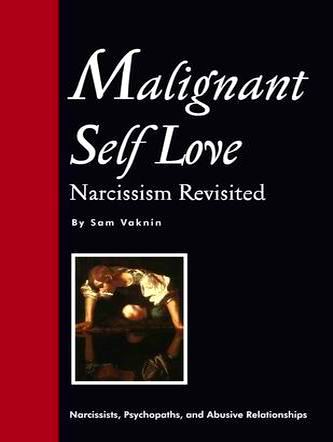
Malignant Self Love - Buy the Book - Click HERE!!!
Relationships with Abusive Narcissists - Buy the e-Books - Click HERE!!!
READ THIS: Scroll down to
review a complete list of the articles - Click on the blue-coloured
text!
Bookmark this Page - and SHARE IT with Others!
Personality traits are enduring, usually
rigid patterns of behavior, thinking (cognition), and emoting expressed in a
variety of circumstances and situations and throughout one's life (typically
from early adolescence onward). Some personality traits are harmful to both
oneself and to others. These are the dysfunctional traits. Often they cause
discomfort and the person bearing these traits is unhappy and self-critical.
This is called ego-dystony. At other times, even the most pernicious
personality traits are happily endorsed and even flaunted by the patient. This
is called "ego-syntony".
The Diagnostic and Statistical Manual (DSM) describes 12 ideal
"prototypes" of personality disorders. It provides lists of seven to
nine personality traits per each disorder. These are called "diagnostic
criteria". Whenever five of these criteria are met, a qualified mental
health diagnostician can safely diagnose the existence of a personality
disorder.
But important caveats apply.
No two people are alike. Even subjects suffering from the same personality disorder can be worlds apart as far as their backgrounds, actual conduct, inner world, character, social interactions, and temperament go.
(continued below)
This article appears in my book "Malignant Self-love: Narcissism Revisited"
Click HERE to buy the print edition from Amazon (click HERE to buy a copy dedicated by the author)
Click HERE to buy the print edition from Barnes and Noble
Click HERE to buy the print edition from the publisher and receive a BONUS PACK
Click HERE to buy electronic books (e-books) and video lectures (DVDs) about narcissists, psychopaths, and abuse in relationships
Click HERE to buy the ENTIRE SERIES of sixteen electronic books (e-books) about narcissists, psychopaths, and abuse in relationships
Click HERE for SPECIAL OFFER 1 and HERE for SPECIAL OFFER 2
Follow me on Twitter, Facebook (my personal page or the book’s), YouTube
Diagnosing the existence of a personality trait (applying the diagnostic criteria) is an art, not a science. Evaluating someone's conduct, appraising the patient's cognitive and emotional landscape, and attributing motivation to him or her, is a matter of judgment. There is no calibrated scientific instrument that can provide us with an objective reading of whether one lacks empathy, is unscrupulous, is sexualizing situations and people, or is clinging and needy.
Regrettably, the process is inevitably tainted by value judgments as well. Mental health practitioners are only human (well, OK, some of them are...:o)). They hail from specific social, economic, and cultural backgrounds. They do their best to neutralize their personal bias and prejudices but their efforts often fail. Many critics charge that certain personality disorders are "culture-bound". They reflect our contemporary sensitivities and values rather than invariable psychological entities and constructs.
Thus, someone with the Antisocial Personality Disorder is supposed to disrespect social rules and regard himself as a free agent. He lacks conscience and is often a criminal. This means that non-conformists, dissenters, and dissidents can be pathologized and labeled "antisocial". Indeed, authoritarian regimes often incarcerate their opponents in mental asylums based on such dubious "diagnoses". Moreover, crime is a career choice. Granted, it is a harmful and unpalatable one. But since when is one's choice of vocation a mental health problem?
If you believe in telepathy and UFOs and have bizarre rituals, mannerisms, and speech patterns, you may be diagnosed with the Schizotypal Personality Disorder. If you shun others and are a loner, you may be a Schizoid. And the list goes on.
To avoid these pitfalls, the DSM came up with a multi-axial model of personality evaluation.
Many additional Frequently Asked Questions (FAQs) about Personality Disorders - click HERE!
Copyright Notice
This material is copyrighted.
Free, unrestricted use is allowed on a non commercial basis.
The author's name and a link to this Website must be incorporated in any
reproduction of the material for any use and by any means.
Malignant Self Love - Narcissism Revisited
Frequently Asked Questions about Pathological Narcissism
Excerpts from the Archive of the Narcissism List
World in Conflict and Transition
Internet: A Medium or a Message?
Write to me: palma@unet.com.mk or narcissisticabuse-owner@yahoogroups.com